
News
Pursuing climate-neutral Heating and cooling
Bayreuth 17th March 2026
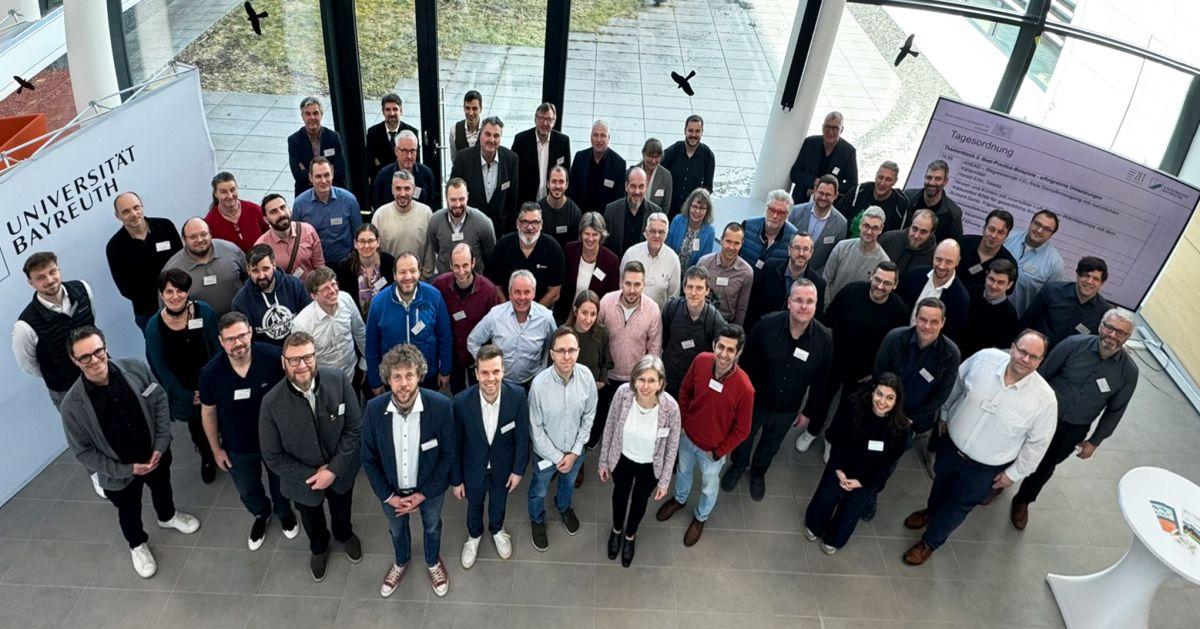
Participants in the symposium
The symposium “Natural Refrigerants in Heating and Air Conditioning” provides new ideas for research, practice, and education.
In March 2026, the symposium “Natural Refrigerants in Heating and Air Conditioning” took place at the Center of Energy Technology (ZET) at the University of Bayreuth as part of the “Heat-Climate-Friendly” project. Funded by the Bavarian State Ministry of the Environment and Consumer Protection, the project focuses on analyzing the potential of natural refrigerants in heating and cooling systems and aims to fill existing research gaps. The goal is to convey the available expertise to decision-makers and various stakeholders. This is being done in cooperation with the State Office for the Environment, which supports knowledge transfer through another project on natural refrigerants and co-organized the event.
Around 80 experts from the fields of skilled craftsmanship, technical planning, industry, administration, science, and politics came together to discuss the current challenges and key issues surrounding the use of natural refrigerants. The relevance of this topic results from the phased reduction (phase-down) and ban on climate-damaging fluorinated greenhouse gases in the EU based on the F-Gas Regulation (EU 2024/573). This regulatory measure is intended to accelerate the use of alternative working fluids in air conditioning systems and heat pumps in order to achieve climate neutrality by 2050. The event included contributions from, among others, the Federal Environment Agency, the Bavarian State Ministry of the Environment and Consumer Protection, trade associations, research institutions and companies. The content focused on three main topics:
- The implications of the new F-Gas Regulation
- Efficient applications of natural refrigerants in heating and air conditioning systems
- Best-practice examples from the crafts, trade and industry sectors
In particular, safety-related aspects, training needs, regulatory frameworks, and practical applications of natural refrigerants were discussed in detail. The program was complemented by a closing discussion and a lab tour of ZET’s Keylabs.
The conference was very well attended by participants, providing valuable input for the project’s future work. In addition, key topics for the upcoming 2027 symposium were identified. These included a desire for more detailed information on operator responsibilities, the safe handling of flammable refrigerants, insights into standardization and efficiency comparisons, as well as additional practical training and application methods. The symposium contributed significantly to networking among relevant stakeholders and enhanced the visibility of the project and the university within the national professional field.